
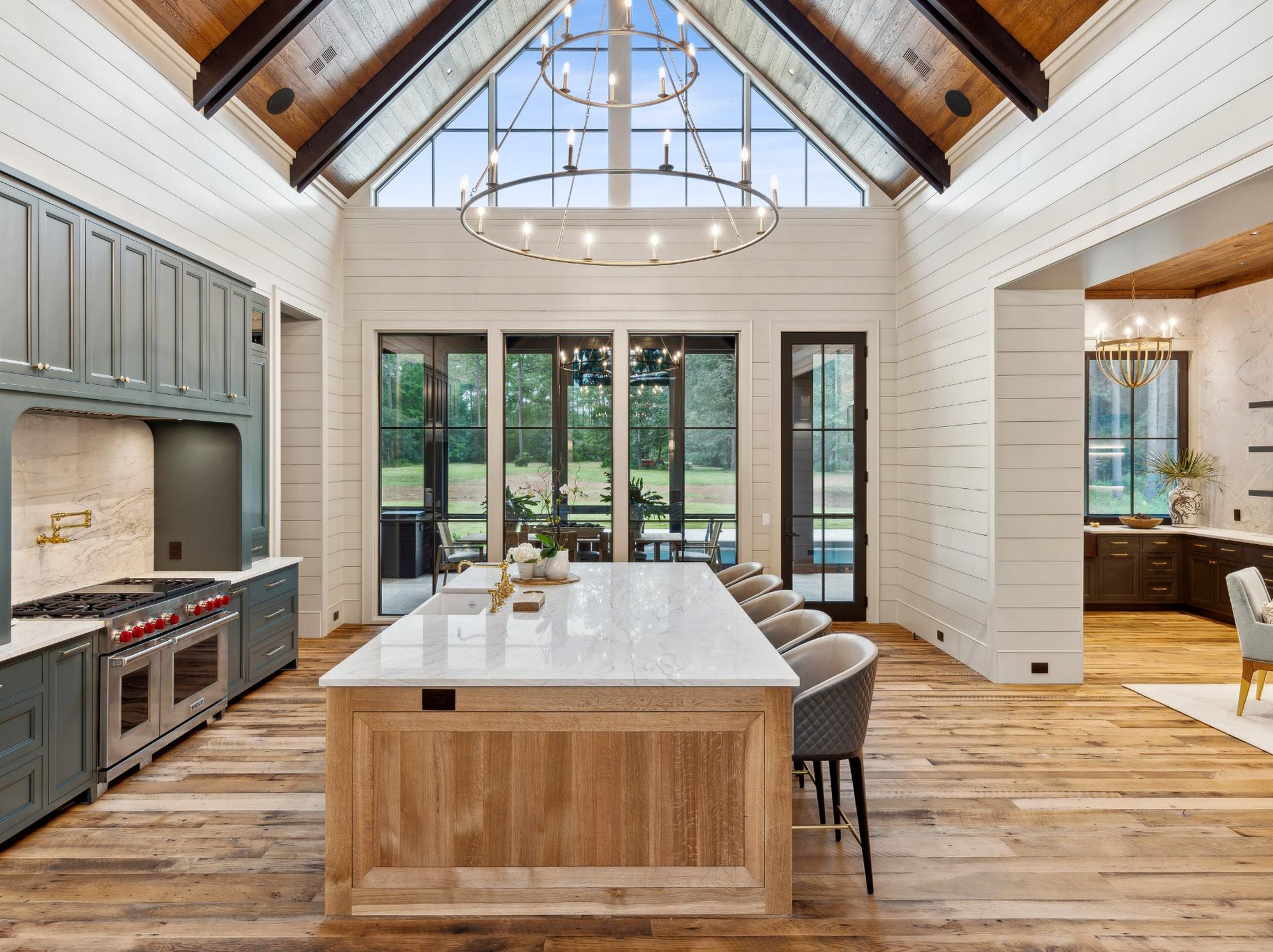
 When planning a new Hilton Head area home, many people use the terms “contractor” and “custom home builder” interchangeably. On the surface, both are involved in construction. Both manage trades. Both deliver a finished structure.
But in practice, the difference between a general contractor and a true custom home builder is significant, especially when building a high-end or fully customized residence.
Understanding that difference can shape the entire experience, from the first design meeting to the day you move in.
At Blackwater Construction Group, custom building is not simply about managing labor. It is about managing vision, quality, and long-term performance.
A General Contractor Focuses on Execution
A general contractor’s primary responsibility is construction execution. They coordinate subcontractors, order materials, schedule work, and oversee the job site.
In many projects, especially renovations or smaller builds, this role works well. The plans are largely complete. The specifications are defined. The scope is clear. The contractor builds what is provided.
Execution is essential. But execution alone does not define the custom building experience.
A True Custom Home Builder Starts Before the Plans Are Final
A custom home builder is involved much earlier in the process. Instead of simply receiving a finished set of drawings, they collaborate during design development.
That involvement often includes:
- Reviewing architectural plans for buildability and long-term performance
- Advising on materials and systems based on climate and lifestyle
- Providing realistic cost guidance as design evolves
- Identifying potential structural or site challenges early
This proactive involvement prevents costly revisions and protects both the budget and the timeline.
Vision Management vs Task Management
A contractor manages tasks. A custom builder manages the vision.
Custom homes require interpretation. A set of drawings does not fully capture ceiling transitions, sightlines, material continuity, or how spaces will feel when complete. A true builder sees beyond the page.
They ask questions such as:
- How will light move through this space?
- Does this finish make sense in this environment long term?
- Will this layout support how the homeowner actually lives?
This level of involvement turns construction into craftsmanship.
Systems Thinking vs Surface Thinking
Luxury homes are complex systems. Structure, insulation, HVAC, moisture control, and finishes must work together seamlessly.
A contractor ensures each trade completes its task. A custom builder ensures the entire system performs properly.
In coastal environments like Hilton Head and Bluffton, this distinction matters even more. Salt air, humidity, heat, and storms demand careful material selection and construction detailing. Long-term durability is not an accident. It is engineered.
Communication as a Core Discipline
Custom building requires structured communication. Design decisions evolve. Selections are made in phases. Adjustments happen.
A true custom home builder establishes clear processes for:
- Budget tracking and transparency
- Change management
- Ongoing client updates
- Quality control checkpoints
This structure reduces uncertainty and builds trust throughout the project.
Accountability Beyond Completion
Some contractors move on once the project passes final inspection. A custom home builder remains invested in the performance of the home after move in.
That includes:
- Thorough walkthroughs and system education
- Warranty oversight
- Ongoing availability for questions
- A long-term reputation built on quality
A custom home is not just another project on a schedule. It is a reflection of the builder’s standards.
Why the Distinction Matters
If a project is highly defined and straightforward, a general contractor may be the right fit.
If the goal is a fully personalized home with architectural detail, advanced systems, and long-term durability, a true custom home builder provides a different level of involvement and advocacy.
The difference is not simply in title. It is in philosophy, structure, and experience.
Choosing the right partner early in the process can shape not only the final result, but the journey it takes to get there.