
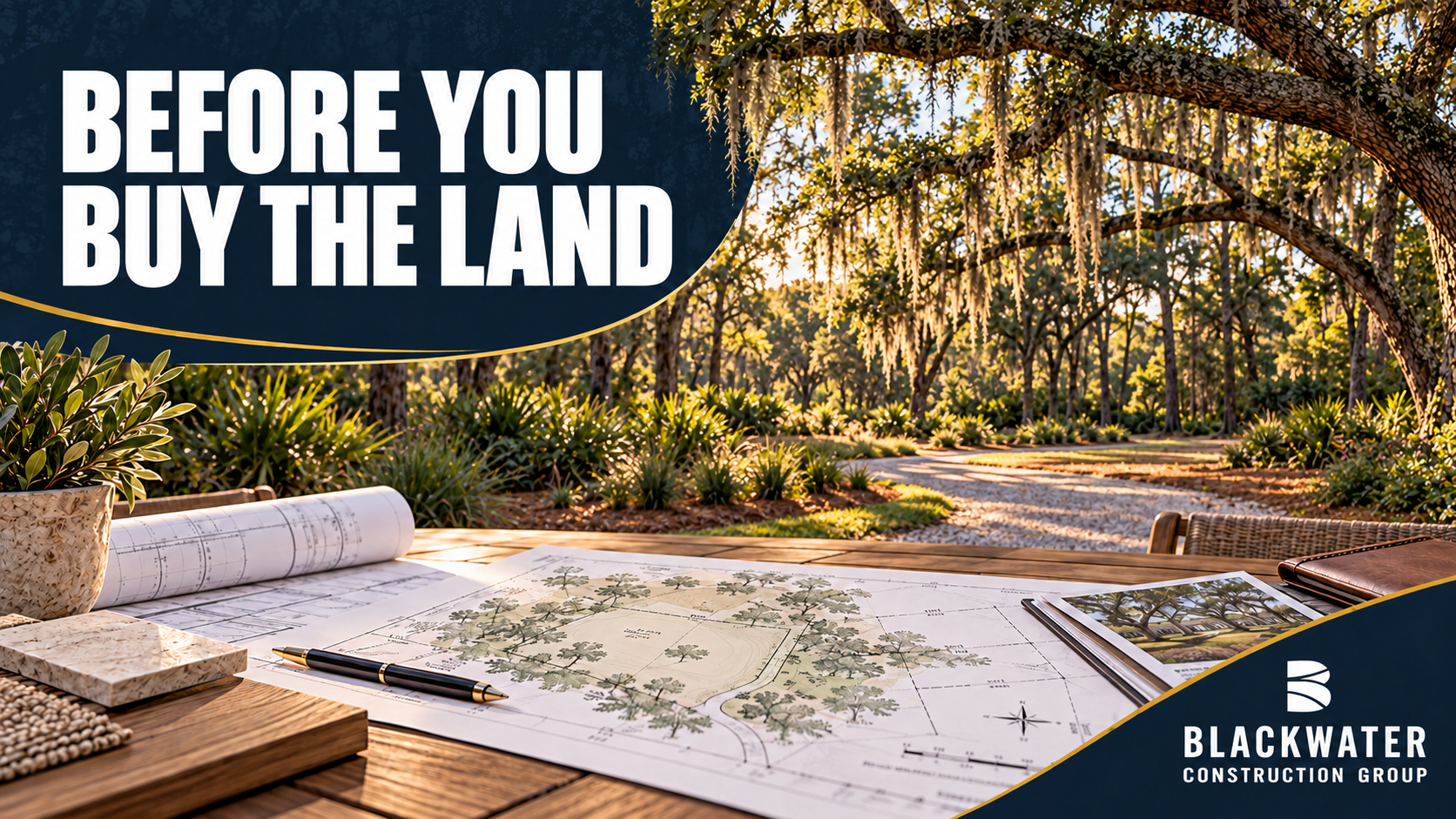
 Building a luxury custom home in the Lowcountry begins long before the first foundation is poured. For many homeowners, the journey starts with finding the perfect piece of land, a beautiful setting where their vision of coastal living can become reality.
Whether you’re considering a homesite on Hilton Head Island, in Bluffton, Okatie, or one of the area’s exclusive residential communities, choosing the right property is one of the most important decisions you’ll make.
A lot may offer stunning surroundings, mature trees, privacy, or an ideal location, but there’s more to consider than its appearance. Understanding how the property’s characteristics may influence your future home can help you make a confident investment and avoid unexpected challenges.
Here are several important considerations to keep in mind before purchasing land for your Lowcountry custom home.
1. Consider How the Property Fits Your Vision
Every custom home begins with a vision. Perhaps you’re dreaming of a spacious Lowcountry retreat with expansive outdoor living areas, a luxury residence designed for entertaining, or a comfortable retirement home surrounded by natural beauty. Before purchasing land, consider how the property’s size, shape, and surroundings align with your plans.
A homesite that looks spacious at first glance may have limitations that influence where a home can be positioned or how much room remains for outdoor amenities. Thinking about your overall lifestyle and desired features early in the process helps ensure that the land you purchase can accommodate the home you envision.
2. Understand the Importance of Lot Conditions
One of the defining characteristics of the Lowcountry is its diverse natural landscape. From wooded properties beneath centuries-old live oaks to open residential lots within established communities, each homesite offers different opportunities. However, these natural characteristics can also influence construction planning. Soil conditions, drainage, property elevation, existing vegetation, and overall site accessibility may affect how a home is designed and built.
While homeowners don’t need to become experts in these areas, understanding that not all properties present the same construction considerations is important. Working with an experienced custom home builder before purchasing land can help identify potential concerns and provide a clearer picture of what building on a particular property may involve.
3. Be Aware of Flood Zones and Coastal Conditions
Living near the South Carolina coast offers an exceptional lifestyle, but coastal conditions should be part of any land-buying decision. Some properties in Hilton Head, Bluffton, and surrounding communities are located within designated flood hazard areas. Depending on the specific location, flood-related requirements can influence home design, foundation planning, insurance considerations, and overall construction costs.
Even properties outside higher-risk flood zones can experience drainage challenges or severe weather.
Understanding these considerations before committing to a purchase allows homeowners to plan more effectively and make informed decisions about their investment. The goal isn’t to avoid coastal living. It’s to build thoughtfully within the environment that makes the Lowcountry so desirable.
4. Research Community Guidelines and Architectural Requirements
Many of the area’s most desirable neighborhoods have established architectural guidelines designed to maintain the character and quality of their communities.
Neighborhoods such as Sea Pines, Palmetto Bluff, Long Cove, and other private residential communities may have requirements governing home design, building placement, landscaping, and construction activities.
These guidelines can influence everything from architectural style to the location of outdoor features. Additionally, local zoning regulations, setbacks, and other development requirements may determine how a property can be used. Understanding the applicable requirements early helps ensure that your home’s design goals align with what is permitted on the property.
5. Don’t Overlook Access and Utilities
A beautiful piece of land is only one part of a successful custom home project. Practical considerations, such as access to utilities and construction infrastructure, can also influence the building process.
Depending on the location, homeowners may need to consider the availability of water, sewer, electricity, and other essential services.
Properties within established neighborhoods may already have much of this infrastructure available, while less-developed homesites may require additional planning or investment. Access for construction vehicles, material deliveries, and future driveways should also be considered. Evaluating these factors before purchasing can help create a more realistic understanding of the property’s development potential and associated costs.
6. Consider the Surrounding Environment and Future Lifestyle
When purchasing land, it’s easy to focus on the property itself. However, the surrounding environment can have just as much influence on your long-term enjoyment.
Think about the setting you want to experience every day. Do you prefer the privacy of a wooded homesite? The convenience of a golf community? Proximity to the beach, shopping, dining, or recreational amenities? Consider how neighboring properties, road access, sunlight, mature landscaping, and community amenities may affect your lifestyle.
A custom home is designed to serve you for many years, so selecting a location that supports your long-term goals is just as important as choosing the right architectural design.
7. Look Beyond the Purchase Price
The purchase price of a lot represents only one component of the overall investment required to build a custom home. Site preparation, utility connections, landscaping, permitting, and construction-related requirements can vary considerably from one property to another.
In some cases, a seemingly more affordable lot may require additional preparation that affects the total project budget. Conversely, a higher-priced homesite with favorable building conditions may offer advantages during construction.
The key is evaluating the property as part of the complete custom home project rather than as an isolated purchase. A thoughtful approach helps homeowners balance their preferred location, design priorities, and overall investment.
8. Involve Your Custom Home Builder Early
One of the most valuable decisions you can make during the land-buying process is involving an experienced custom home builder before finalizing your purchase. A knowledgeable builder can offer a construction-focused perspective that complements the guidance provided by your real estate agent, surveyor, and other professionals.
From evaluating general site characteristics to discussing how your desired home might fit the property, early collaboration can help identify opportunities and potential challenges.
This approach also creates an opportunity to begin discussing architectural concepts, priorities, and preliminary budget expectations before committing to a particular homesite. When the right professionals are involved from the beginning, homeowners can move forward with greater confidence and a clearer vision of what’s possible.
Start Your Custom Home Journey with Confidence
Finding the right piece of land is an exciting first step toward creating a home that’s uniquely yours. But the best homesites offer more than an attractive setting…they provide a foundation for thoughtful design, quality construction, and years of enjoyment.
At Blackwater Construction Group, we understand the unique opportunities and considerations involved in building luxury custom homes throughout Hilton Head, Bluffton, Okatie, and the surrounding Lowcountry.
Our team works closely with homeowners to bring their vision to life through careful planning, clear communication, and exceptional craftsmanship.
Considering purchasing land for your future custom home? Contact Blackwater Construction Group to discuss your plans and learn how involving an experienced builder early can help you make informed decisions before construction begins.